

Hardscaping Ideas That Pair Perfectly with Local Soil Types
Introduction: Local soil tells the story of every successful hardscape. If the base is aligned to the soil conditions beneath your feet, patios feel solid, paths stay in place, and walls look crisp and sharp through every season. Below, you will find practical, field-tested ideas that match real soil conditions seen around South Bend IN, and Granger IN, written with winter in mind and long-term longevity as the goal.
Hardscaping For Clay-Heavy Yards
Build For Drainage First
Clay holds water like a sponge, then swells, then tightens up again when it dries. That cycle is the main culprit behind wavy pavers and cranky steps. When building patios or walkways in clay, think open-graded from the start. An open-graded base uses clean angular stone that packs tight while leaving just enough space for water to move down and out. Pair that with a geotextile fabric between native clay and the base to keep fine particles from migrating into your stone. The fabric acts as a filter, keeping your carefully built foundation clean. In South Bend IN where winter freeze can come on quick, that clean base is what fights heave.
Raised patios help clay sites breathe. By raising the hardscape an inch or two above grade and providing a place for water to exit, you keep moisture from lingering just beneath the surface. A perforated drain tile at the patio edge or a discreet channel drain at the low side can move runoff away before it ever causes trouble. Permeable paver systems shine here, too. They let water drop through joints into a deep reservoir of open stone, and the system drains to daylight or a safe outlet. On clay, a permeable assembly often outlasts a closed one because pressure has somewhere to go. The goal is simple, and it works year after year. Keep water moving, and your hardscape stays calm.
Retaining And Steps That Beat Frost Heave
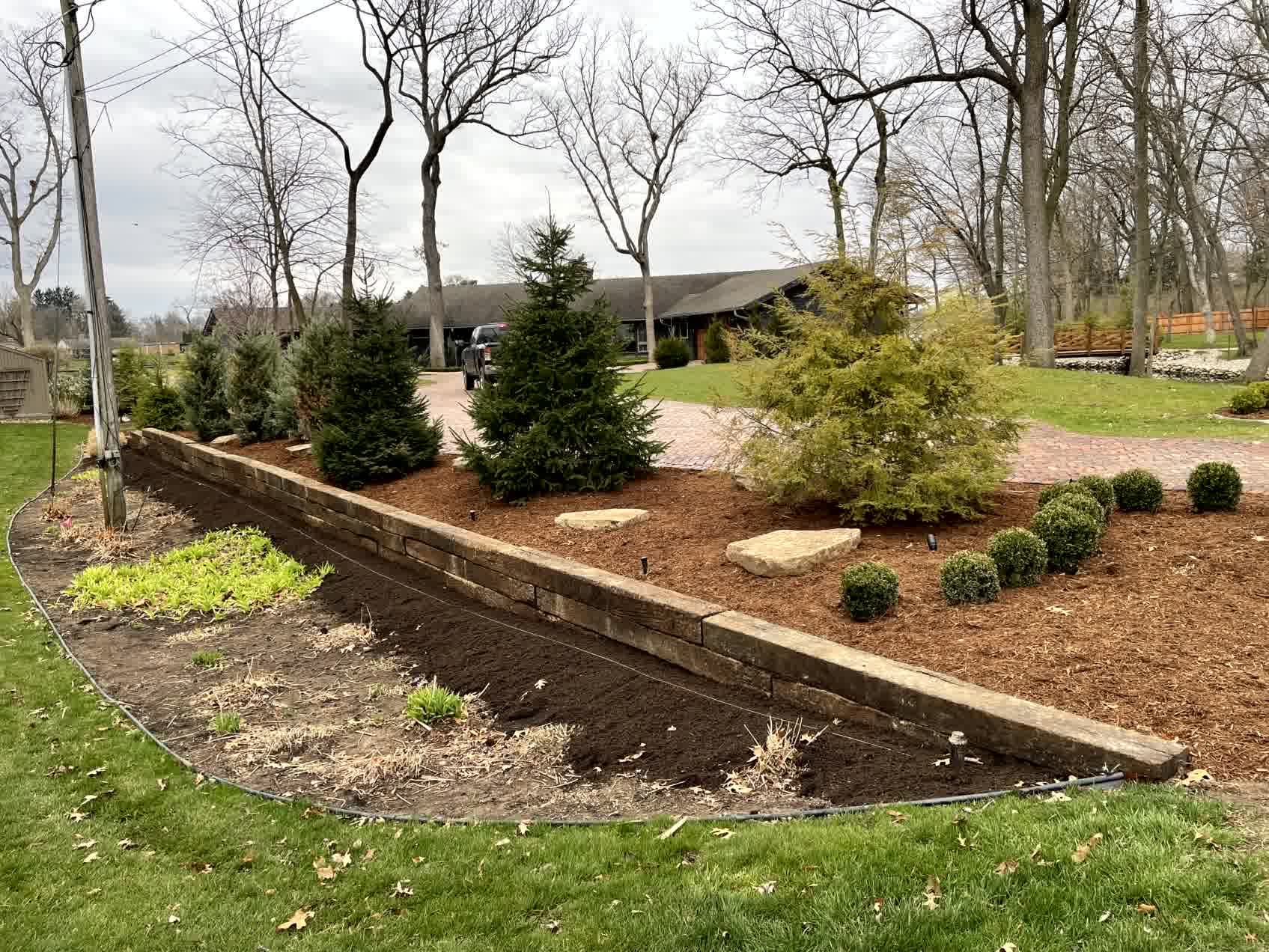
Clay slopes look innocent in summer and stubborn in winter. Segmental retaining walls handle that mix well because they adjust just slightly instead of cracking like poured concrete. Start with a level trench lined with fabric, then build a thick pad of compacted angular stone. The first course is the boss, so spend time getting it dead level and straight. Backfill with clean stone as you rise, not with native clay, and wrap that backfill with geotextile so fines do not creep in. A buried drainpipe behind the wall relieves hydrostatic pressure. Cap blocks set with a proper adhesive rated for cold weather finish it cleanly and help the top stay tight through the freeze cycle in Granger IN.
Steps cut into clay need extra attention where treads meet the slope. Each riser should sit on compacted stone, not soil, and that stone should extend past the back of the step so weight spreads into the hillside. Where steps meet a path or patio, add an aluminum or concrete edge restraint to lock the joint. Polymeric sand in the joints should be swept, vibrated with a plate compactor, then lightly misted to set. The compacting step is often skipped, and that is where joint failure starts. When every layer drains and every contact point is supported by solid stone, steps ride out winter much better and feel sturdy underfoot when spring arrives.
Hardscaping That Loves Sandy Or Loamy Soil
Lock In Stability Under Pavers And Patios
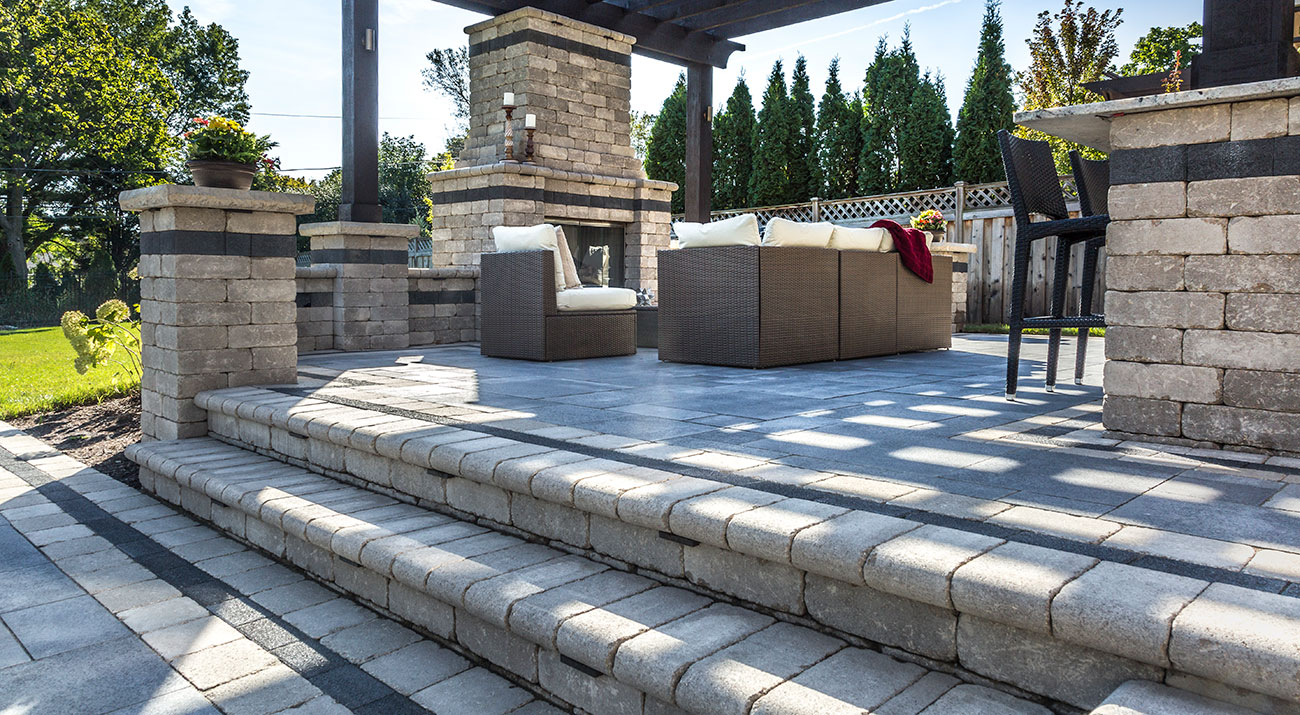
Sandy loam is a dream to shape because it grades nicely and stays workable, though it still needs structure. On these sites, base depth can be fine-tuned to use less stone without sacrificing performance. A typical patio might receive 4 to 6 inches of compacted, angular base under a 1-inch bedding layer, with a plate compactor run in short lifts. The difference maker is edge restraint. Without a crisp, anchored edge, pavers creep outward over time, even in easy soils. A hidden concrete toe or a continuous aluminum edge screwed into the base creates a clean, invisible guard that keeps patterns tight.
Because sandy soils drain quickly, bedding sand can dry too quickly during installation, leaving soft joints. A light mist while compacting helps the bedding layer settle evenly, and finishing with a high-quality polymeric jointing sand locks pavers against washout after the first heavy rain. Larger-format slabs perform beautifully on loam when set on an open-graded base with a fine-chip bedding. That combo gives the slab full support without trapping water. In areas with vehicle traffic, consider a geogrid layer in the base to spread loads. It is a small addition that offers a big boost in stability when a driveway apron or parking pad meets your patio.
Water-Wise Features That Work With Fast-Draining Ground
Fast-draining soils invite creative water features that still firmly belong to the hardscape family. A dry creek bed made with river rock and scattered boulders channels the roof and patio runoff away from the house while looking like it was always there. Lay a fabric underlayment, then set your stones into a shallow swale that actually carries water during storms. It is not just decorative; it works. Where a slope meets a flat yard, a cobble spillway doubles as a visual accent and an overflow path from a permeable patio. When rainfall hits hard in South Bend IN, these features guide water gently instead of letting it scatter across your lawn.
Previous systems often pair well with sandy loam because the soil below readily accepts water. Consider a permeable paver courtyard tied to a rock reservoir below, with that reservoir overflowing into a stone-lined swale. The patio surface stays dry, joints hold, and your gutters have a destination during those aggressive summer storms. Around Granger IN, adding a shallow trench of decorative stone under a downspout extension can control splash at the base of your home and protect adjacent hardscape from erosion. When the soil is willing to help, the hardscape can look effortless and still carry a heavy workload.
Hardscaping For Mixed Midwest Soils And Old Fill
Test, Then Design For The Reality Underfoot
Many yards carry a blend of glacial till, construction fill, and pockets of organic soil. Mixed conditions change quickly from one corner of a site to another. Before setting a single paver, take a simple approach to testing. Probe with a shovel or a digging bar and note where the soil suddenly turns dense or sticky. Dig a small hole and fill it with water to see how fast it disappears. These observations inform base depth and drain paths. On variable ground, it is smart to adjust the base accordingly rather than forcing a one-depth-fits-all plan. More stone where soil is soft, a geotextile separator where fines are active, and perhaps a strip drain at the low edge to lead water out.
Adjust the layout when the soil demands it. If one edge of a patio sits over unstable fill, pull the hardscape back a foot and run a band of decorative gravel there instead. That simple move keeps the paved section on reliable ground while still finishing the scene cleanly. For sites that cannot tolerate additional weight near foundations, use pedestal systems under large porcelain pavers to create a floating surface with minimal soil load. Each pedestal distributes weight to multiple points, a smart way to bridge small, weak spots without pouring concrete. It looks sleek, and it respects the realities beneath the surface.
Choose Materials That Forgive Movement
Some materials accept seasonal movement better than others. Interlocking concrete pavers are engineered to lock tightly while still flexing slightly with the freeze-thaw cycle. Permeable versions take that a step further by relieving pressure through the joint. Natural flagstone set on open-graded stone with a chip bedding creates a classic look that tolerates minor shifts without cracking. If you prefer a monolithic vibe, consider large-format exterior-grade slabs that sit on a modern hybrid base rather than a rigid slab. The surface looks continuous, but the system underneath remains flexible and serviceable.
Edges matter in mixed soils, so select restraints that can be serviced easily. Aluminum edging with strong stakes can be lifted and re-seated if an area settles, then tapped back into line without demolition. High-quality polymeric sand that remains slightly elastic after cure helps joints accommodate minor movements while still resisting weed growth and washout. Where a driveway meets a patio, an inset band of heavier cobbles can accept turning forces that would scuff finer slabs. Across South Bend IN, and Granger IN, these forgiving choices keep hardscape looking composed through real-life use, kids at play, and the occasional delivery truck.

Conclusion
If your yard’s soil has been calling the shots, let it speak and then design with it, not against it. Thoughtful base prep, smart drainage, and materials that match the ground will give you a patio or path that simply feels right. If you want a plan that leans into local conditions around South Bend IN, and Granger IN, Busy Lil Beavers can map the soil story, tailor the build, and leave you with a hardscape that holds up through winter and invites you outside when the sun returns. Reach out to schedule a friendly consult, and let the team handle the heavy lifting so you can enjoy the results.


"*" indicates required fields