

Retaining Walls | Stop Soil Erosion When November Comes
Introduction: November in Indiana sneaks in with cold rain, early freezes, and the kind of soggy weekends that make slopes way more slippery than you’d expect. Retaining walls are efficient problem-solvers, holding down the line for when the soil wants to wander and giving your landscape a strong foundation. When built with care, they make hillsides stable, keep mulch where it belongs, and protect foundations from washout.
Retaining Walls For Real Erosion Control In Indiana Fall
How Proper Drainage Makes Retaining Walls Work
A retaining wall is only as strong as the water plan behind it. The goal is simple on paper and crucial in practice. Relieve pressure by letting water escape. A compacted base of crushed stone creates a stable, free-draining platform. Behind the wall, clean, angular backfill and a perforated drain pipe provide a quick path for runoff. Filter fabric separates soil from stone, preventing fines from migrating and clogging the system over time.
In November, that drainage plan pays for itself. Indiana’s freeze then thaw cycles create constant expansion and contraction in saturated soil. Without a way out, hydrostatic pressure builds and pushes on the wall face. Weep routes, a sloped drain line, and outlets placed at daylight keep the base dry enough to resist that pressure. It is not glamorous, though it is the difference between a wall that lasts and one that starts shifting by spring.
What Materials And Hardscaping Details Matter In Granger IN
Different wall types solve different problems, and the right choice often depends on the site. Segmental concrete blocks lock together with a built-in setback that fights soil load. Natural stone brings a timeless feel, yet still needs modern drainage behind it. Poured concrete gives a sleek face when the design calls for it, and it can be faced with veneer later to soften the look. In Granger IN, where many yards roll gently toward the street, these options meet the practical needs of curb appeal and soil control at the same time.
Craft details carry just as much weight as the material choice. A solid base course that is perfectly level across the run prevents small errors from compounding as rows stack upward. Geogrid reinforcement ties the wall back into the slope for taller buildings and distributes load into the soil mass. Corner blocks and cap adhesives rated for freeze-thaw keep edges crisp through winter. These are great landscaping details that make the wall feel settled and dependable when the weather turns sloppy and rainy.
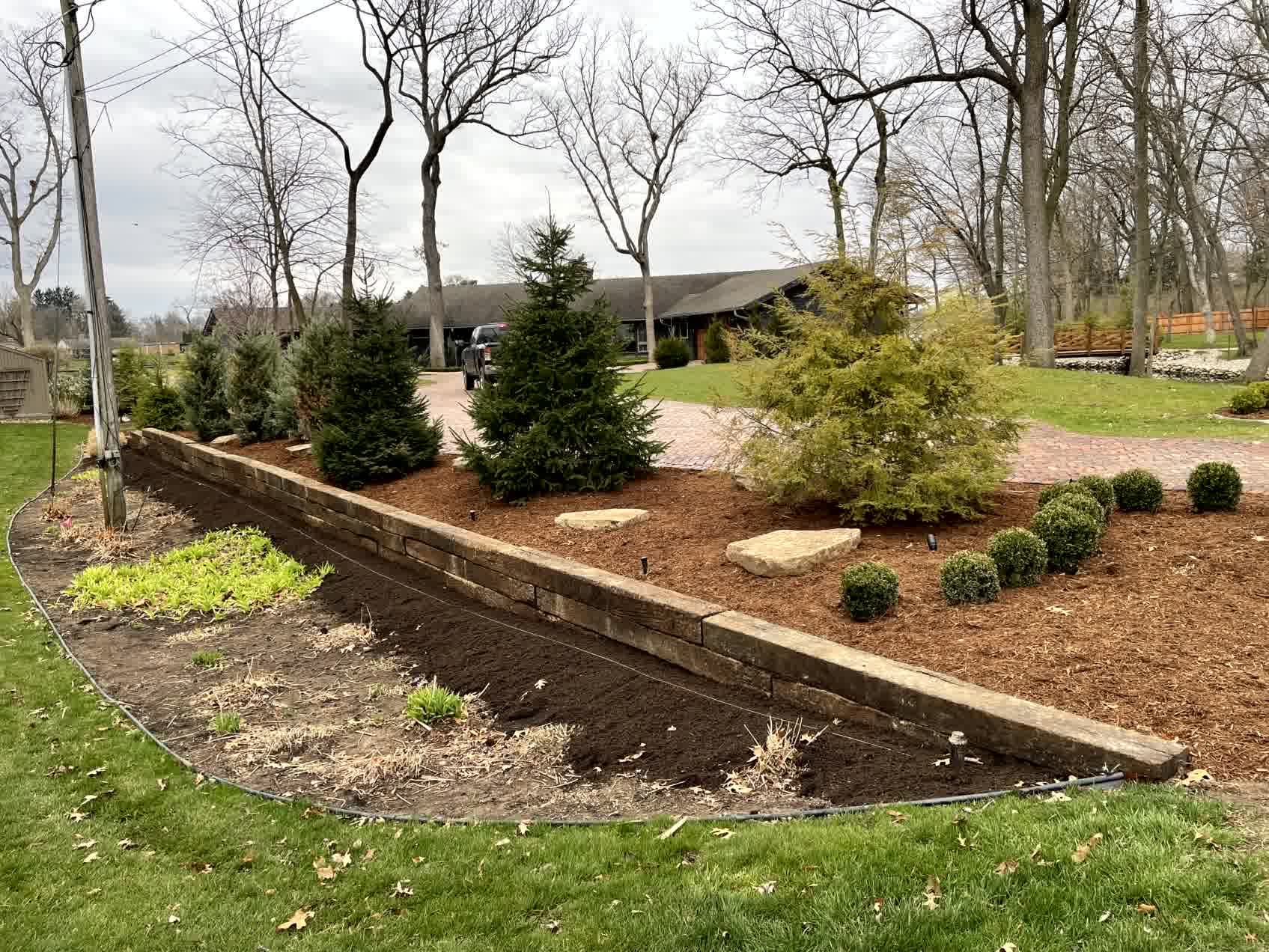
Retaining Walls That Handle Freeze, Thaw, And Heavy Rain
Foundations, Backfill, And Geogrid That Resist Movement
Clay in Indiana swells up when wet and tightens when dry, which means the supporting structure under a wall must be ready for movement. A well-compacted base of dense graded aggregate, extended below grade and beyond the face, controls settlement. The base thickness depends on the wall height, though even shorter garden walls benefit from a few extra inches of depth and careful compaction in thin lifts. Backfill with clean stone behind the wall face continues the theme by keeping the mass lighter and more forgiving when saturated.
As wall height increases, geogrid becomes the quiet hero. Installed in horizontal layers that extend back into the slope, it locks soil into a unified block that resists sliding. The wall face is no longer doing the job on its own. It is part of a system that moves as one. In practice, that means fewer bulges after a wet November and far less chance of a springtime lean. The structure disappears behind the scenes while the visible wall holds steady and calm.
Terracing, Slopes, And Yard Flow That Protects Soil
Sometimes the best solution is not a single tall wall but a series of shorter terraces that are in step with the grade. This approach gives water more places to drop and slows it down before it gains speed. Shorter walls also reduce the unbalanced load on any one structure, which is useful in neighborhoods where yards back up to each other and space is tight. In Granger IN, terracing often pairs nicely with small planting beds that stabilize each level and add winter interest with evergreens.
Good yard flow is part of erosion control, too. The wall should never be the only line of defense against runoff. Grading that nudges water toward drains, a discreet swale that carries flow along the property edge, and downspouts that discharge to daylight protect the area behind the wall from becoming a moat. In November, leaf litter tries to clog everything it can touch. Designing pathways that shed water cleanly keeps that debris from settling where it can do damage.

Retaining Walls As Long-Term Landscape Infrastructure
Maintenance Habits That Keep Walls Strong
A stable wall should not demand constant attention, yet a few seasonal habits make a big difference. After the last leaf falls, a quick sweep at the base keeps organic buildup from trapping moisture against the face. Clear the outlet for the drain pipe so it is not hidden under mulch or frozen debris. Check capstones for tiny wobbles and reset them before freeze cycles widen the joints. Small checks now prevent bigger headaches when the ground is shifting through winter.
Take a look uphill as well. If a path or bed above the wall erodes, that soil has to go somewhere. A strip of gravel at the top edge helps filter fines and reduces splatter. If snow needs to be piled, keep the mound a little back from the wall so meltwater can drain down rather than press in. These are everyday moves that don’t feel like maintenance, yet they keep the structure working as it was designed.
Design Touches That Blend Retaining Walls Into Hardscaping
Function comes first, though it is fair to want the wall to look beautiful all year. A gentle cap overhang casts a slim shadow that adds depth on gray November afternoons. Integrated steps turn a practical slope change into a natural route down to the yard. Low, warm lighting near footings brings out texture at night and makes icy patches easier to spot. When the wall is part of a wider hardscaping plan, the yard feels intentional even when perennials are sleeping.
Plantings help with erosion and add softness. Deep-rooted grasses and groundcovers connect the upper soil, so rainfall hits leaves first rather than bare dirt. Evergreens add structure and color during late fall. In Granger IN, where winter often arrives in fits, these layers keep the space lively as the season shifts. The wall holds the grade. The plants hold the surface. Together, they protect the soil and create a landscape that still feels welcoming when temperatures dip.

Conclusion
If your yard is washing out at the first November rain or the slope by the driveway keeps sliding toward the curb, a well-built retaining wall can calm things down for good. It is one of those upgrades that safeguards your property while making it look thoughtfully designed. Busy Lil Beavers helps homeowners choose the right structure, build the drainage you cannot see, and shape the hardscaping so it feels like it has always belonged. When you are ready to steady the ground and bring order back to the landscape, reach out to contact us, and a friendly team member will help you plan the next step on a timeline that suits you.


"*" indicates required fields